Lavender is probably better known to many as an ornamental plant rather than a spice. It is an easy-care and attractive perennial that thrives particularly in dry, sunny locations.
Cultivation and propagation – what should you pay attention to?
Find a sunny location with lean, calcareous, and dry soil for your lavender. Planting several perennials is best, as this creates a much more attractive appearance. However, a distance of 50 cm should be maintained between plants. Lavender perennials tend to become woody, so the plants should be cut back heavily after flowering in August. This will encourage a beautiful, bushy growth. In winter, it's important to protect your lavender from frost, as hardly any lavender variety is truly winter hardy.
Harvesting and preserving – when, what and how best?
Harvesting begins shortly after the flowers open. Pinch the young leaves and shoot tips. Once the buds have burst, the flowers can be harvested. Lavender is a classic for drying. Simply gather them into small bunches and hang them in a dry place.
Use – What recommendations for herbal cooking?
In the kitchen, lavender is often used in fish and lamb dishes to give them that certain something.
The scent of lavender blossoms is distinctive and very popular with most people. It has a calming and relaxing effect, which is probably why many people keep a lavender pillow in their room or closet. Lavender also works very well when added to bath water.
Botanical – What kind of plant is this?
Lavender is a perennial plant. Originating in the Mediterranean region, it prefers to grow on rocky, dry ground. Its origins are also revealed by its felty, slightly silvery leaves, which provide natural sun protection.
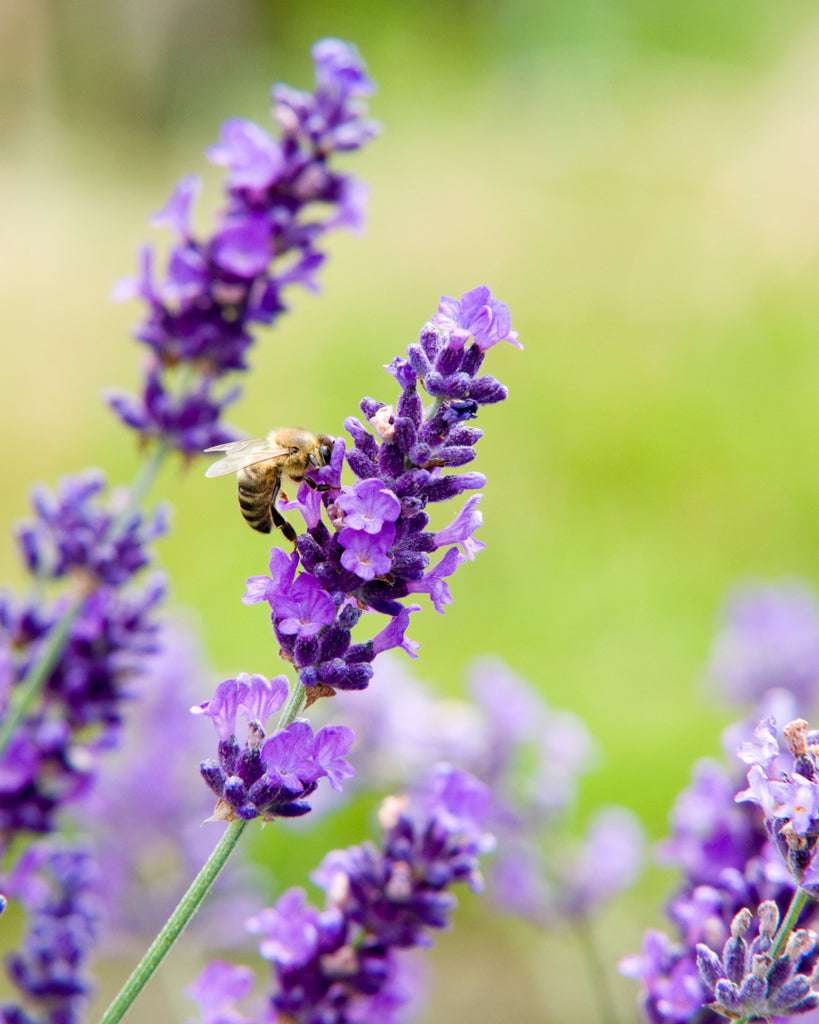
Lavandula angustifolia 'Hidcote Blue-Strain' is a popular lavender variety that enchants with its intense violet-blue flowers and aromatic fragrance. This evergreen perennial blooms from June to ...
Lavandula angustifolia 'Hidcote Blue-Strain' is a popular lavender variety that enchants with its intense violet-blue flowers and aromatic fragrance. This evergreen perennial blooms from June to August and is a magnet for bees and butterflies. Growing to a height of 30–50 cm, this lavender is ideal for beds, borders, rockeries, or as a low hedge. Its drought tolerance also makes it particularly easy to care for.
The 'Hidcote Blue-Strain' lavender brings a Mediterranean flair to any garden and is ideal for creating natural, fragrant, and colorful plantings. Its intense aroma also makes it a popular plant for scented pillows and other lavender products.
Details: Sowing indoors/greenhouse: February to March Sowing outdoors: April to May Germination time: 14–21 days at 18–20 °C Sowing depth: Cover seeds only lightly with soil Height: 30–50 cm Planting distance: 30–40 cm Flowering time: June to August Soil: Permeable, calcareous, dry to fresh Fertilization: Organic fertilizer, sparingly Location: Sunny Water requirement: Low; avoid waterlogging
Growing tips: Light germinator. Sow at temperatures of 15–20°C and keep evenly moist. After germination, store in a cooler location. Lavender thrives best in a full-sun location with well-drained, slightly sandy soil. After flowering, pruning is recommended to keep the plant compact and vigorous. However, this should not be done into the old wood. Lavender is hardy, but in regions with harsh winters, it requires light protection, such as brushwood.
Use: Fragrant plant Bee pasture Herb and rock garden dried flowers
Bag contents: Approx. 100 seeds Store in a cool, dry place.
They all share a characteristic scent, but there are many other differences to discover. Here's a brief overview of lavender groups and some example varieties:
– Bush lavender: It is recommended for rock gardens and herb spirals, but also ideal for pot cultivation. It requires plenty of sun and little fertilizer. These include 'Blue Cushion' (sky blue), 'Dwarf Blue' (purple-blue), and 'Peter Pan' (dark purple).
– True lavender: Ideal for use as a soap fragrance, for baking, or in scented sachets, it grows as a subshrub and requires good drainage and pruning in April; these include 'Folgate' (mid-blue), 'Two Seasons' (light purple), and 'Siesta' (sky blue).
– Rosé lavender: particularly pretty, but quite sensitive to cold; these include 'Staudenhochzeit', 'Rosea', and 'Mrs. Katherine'
– Tufted Lavender: Named for its striking tuft, not hardy, very well known; these include 'Papillon' and 'Kew Red'
Interesting facts – What else is there to learn?
If you want to try something new, throw a few lavender sprigs into the embers at your next barbecue. This will give your grilled meat a unique aroma.
Roses, by the way, are excellent partners for lavender. Roses become significantly more resistant to powdery mildew when lavender grows among them.